THE POCKET GUIDE · REF · PAGES 156–164
References & closing pages
The complete bibliography and the final pages of the original publication.
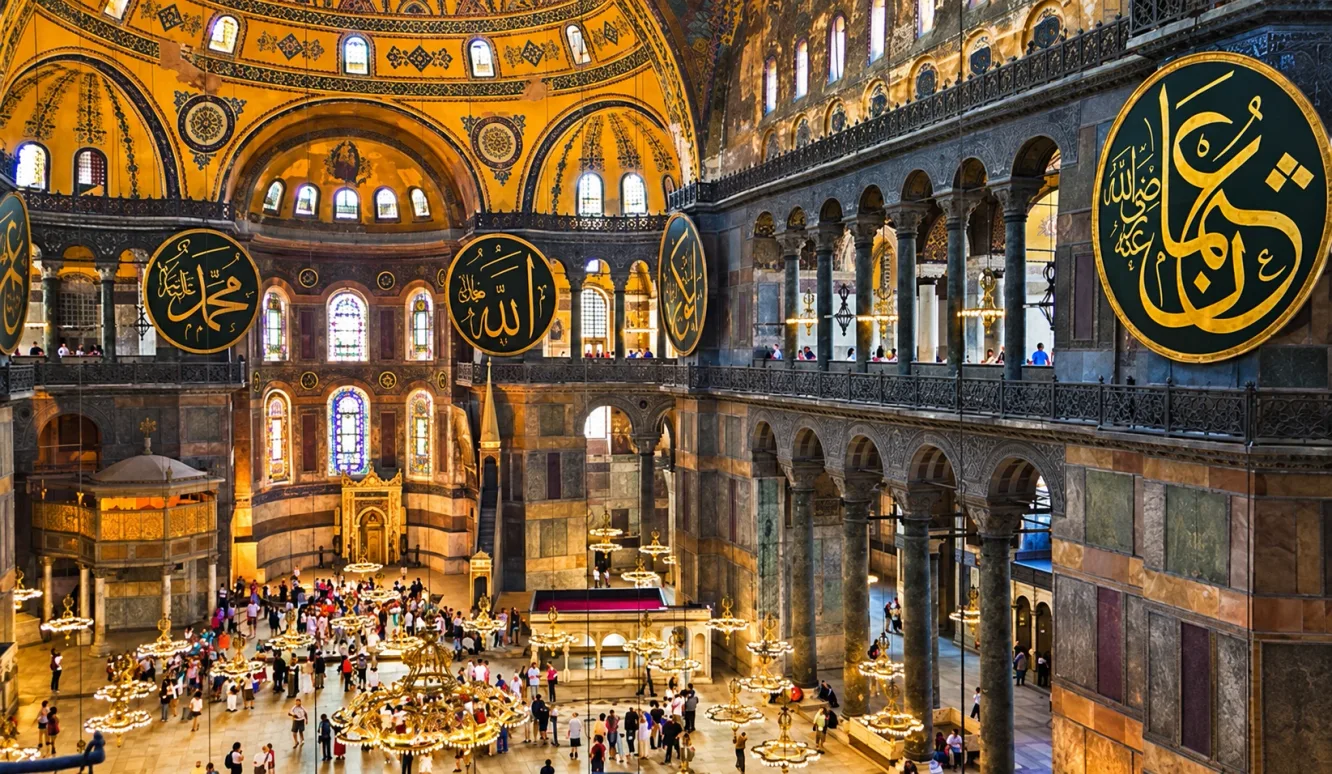
The complete original English text. Historical and theological commentary reflects the perspective of the source publication.
Contents & navigation
References
Avdoulos, E. (2015). Istanbul´s Hagia Sophia: Challenges of managing sacred places. Complutense Journal of Scholastic Studies, 1, 51–68.
Avci, B. (2018). Comparative theology: An alternative to religious studies or theology of religions? Religions, https://doi.org/10.3390/rel9030083
Al-Mubarakpuri, S. R. (2002). Ar-Raheeq al-makhtum [The sealed nectar]: Biography of the Noble Prophet. Darussalam Publishers.
Al-Faruqi, I. R. (1992). Al-Tawhid: Its implications for thought and life (2nd ed.). International Institute of Islamic Thought (IIIT).
Demir, H. (2023). Hagia Sophia: Politics of space and hauntology [Master´s thesis, City University of New York]. CUNY Academic Works.
Catechism of the Catholic Church. (1994). Libreria Editrice Vaticana.
Jeffreys, E., Cormack, R., & Haldon, J. (Eds.). (2008). The Oxford handbook of Byzantine studies. Oxford University Press.
Jones, L. (2008). [Review of the book Art and identity in thirteenth-century Byzantium: Hagia Sophia and the Empire of Trebizond, by A. Eastmond]. Church History, https://doi.org/10.1017/s0009640708000139
Kaltner, J. (2011). Introducing Islam: From History to Faith. Fortress Press.
Mainstone, R. J. (1988). Hagia Sophia: Architecture, structure and liturgy of Justinian›s great church. Thames & Hudson.
Mark, R., & Çakmak, A. Ş. (Eds.). (1992). Hagia Sophia: From the age of Justinian to the present. Cambridge University Press.
Mawson, T. J. (2024). On worshipping the same God. AGATHEOS – European Journal for Philosophy of Religion, https://doi.org/10.69574/aejpr.v1i1.22900
Ministry of Culture and Tourism of the Republic of Türkiye. (n.d.). Topkapı Palace. https://www.ktb.gov.tr/EN-113764/ topkapi-palace.html
Necipoğlu, G. (1992). The life of an imperial monument: Hagia Sophia after Byzantium. In R. Mark & A. Ş. Çakmak (Eds.), Hagia Sophia: From the age of Justinian to the present (pp. 195–225). Cambridge University Press.
Ozlu, N. (2010). Hagia Sophia and the demise of the sacred. Design Philosophy Papers, https://doi.org/10.2752/1448713 10x13968744282719
Oztig, L. I., & Adisonmez, U. C. (2023). Sovereignty, power, and authority: Understanding the conversion of Hagia Sophia from a performative perspective. Southeast European and Black Sea Studies, https://doi. org/10.1080/14683857.2023.2189543
Republic of Türkiye Directorate of Communications. (n.d.). History of Hagia Sophia. Ayasofya-i Kebir Cami-i Şerifi. https://www.ayasofyacamii.gov.tr/en/ayasofya-tarihi
Runciman, S. (1951–1954). A history of the Crusades (Vol. 1-3). Cambridge University Press.
Sahih International. (1997). The Qur’an: English meanings and notes. Abul-Qasim Publishing House.
UN Tourism. (2025). International tourism highlights (2025 ed.). World Tourism Organization. https://www.e-unwto.org/
World Bank Group. (2026). Tourism for development: Lessons learned from a decade of World Bank experience. World Bank Publications. https://www. worldbank.org/ext/en/topic/tourism
Society of Biblical Literature. (n.d.). The nativity stories. Bible Odyssey. https://www.bibleodyssey.org
Wiles, M. (1996). Archetypal heresy: Arianism through the centuries. Oxford University Press.
World Council of Churches. (2001). Churches in dialogue: The Council of Chalcedon and its reception. WCC Publications.
Zuckerman, C. (2002). Heraclius and the return of the Holy Cross. Travaux et Mémoires, 14, 197–218.
TripAdvisor. (n.d.). Church of the Holy Sepulchre, Jerusalem: Reviews. https://www.tripadvisor.com/ Attraction_Review-g293983-d319062-Reviews-Church_ of_the_Holy_Sepulchre-Jerusalem.html
Go Türkiye. (n.d.). Hagia Sophia travel guide. Retrieved September 26, 2026, from https://goturkiye.com/ istanbul/hagia-sophia
Editorial image noteBlank closing page in the source publication.
Editorial image noteBlank closing page in the source publication.
Editorial image noteBlank closing page in the source publication.
Editorial image noteBlank closing page in the source publication.
Editorial image noteBlank closing page in the source publication.
End of this section