THE POCKET GUIDE · 06 · PAGES 91–100
Understanding the Islamic Creed
The guide’s introduction to Tawhid: the pure oneness of God.
The complete original English text. Historical and theological commentary reflects the perspective of the source publication.
Contents & navigation
Understanding the Islamic Creed
The Pure Oneness of God
6.1 Introduction
Early Christianity emerged from Judaism, which is strictly monotheistic (belief in one God). This strong emphasis on the singular God of Israel (Yahweh) was deeply ingrained in the minds of the first Christians. Jesus affirmed the oneness of God in several occasions (e.g. Mark 12:29 “The Lord our God, the Lord is one”).
A Call for Wisdom: It is a striking historical irony that the early prayers offered on the site of Hagia Sophia were led by Arian bishops who, like the Muslims (centuries later), rejected the co-equality of the Trinity in favor of the supremacy of the One indivisible God.
The Message of Islam: Unlike many other religions and creeds established by prominent men across the history, Muslims believe that Islam was originated by the Creator of all beings to guide people to Him, make them aware of the purpose of life and help them make the best of their living on Earth.
The Simplest Definition of Islam
Religion of Monotheism
| Message to Mankind | Final Divine Book |
| Way of Life: Effective; Positive | Universal Civilization: Ethical; Material |
6.2 Understanding the Message of Islam
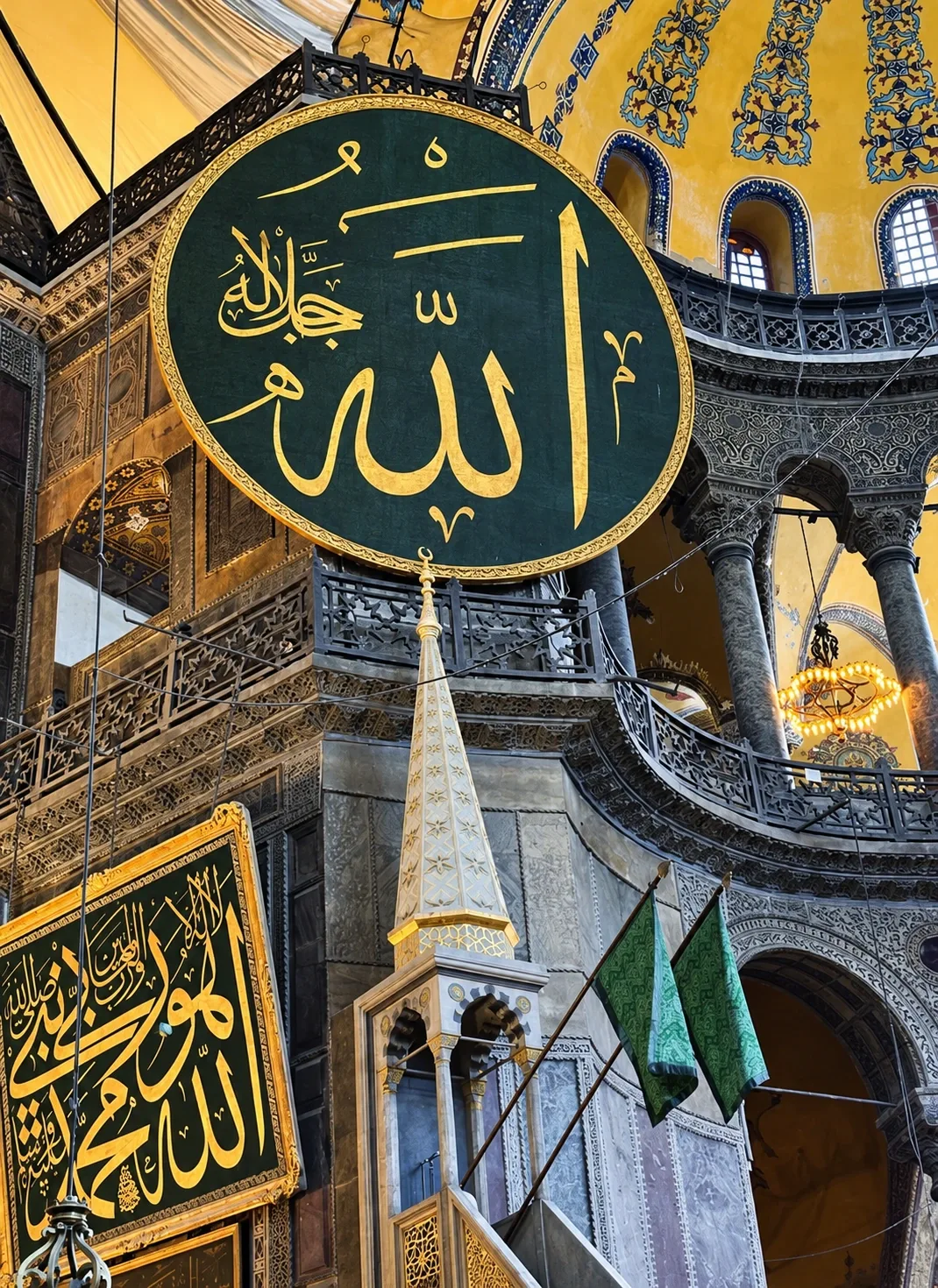
Muslims believe in one God and worship Him alone. His name is Allah (pronounced with a long vowel, Allaah). He is the Lord of all beings who created them.
There is no God or deity except Him. No one is worthy to be worshipped except Him. He neither begets nor is born and He has no partners or children. He alone controls the whole universe and He alone gave life to all living creatures. To Him all people will return after they die.
Worshiping Allah alone is not only by praying to Him, but every good thing we do in His Kingdom and to any of His creatures is an act of worship.
Islam is the religion of monotheism. It carries a universal Message and the final Divine Book from the Lord of people to all people. Once embraced, Islam becomes a prosperous way of life and establishes a universal civilization.
The Prophet of Islam Muhammad was not but a Messenger who conveyed God's final Message and concluding divine Book “The Quran”.
It acknowledges and confirms all previous books God sent to humanity (in their original forms without subtractions and alterations) such as the Scrolls revealed to Abraham, the Torah revealed to Moses, the Psalms revealed to David and the Gospel revealed to Jesus.
Therefore, Islam carries the same Message conveyed by the Messengers and Prophets God sent across the history to protect people from being misled (i.e. go astray, worship false deities and
fall in abomination).
It is the Message of monotheism which means worshipping one God alone without associating any partners with Him. It is also a universal Message that alerts people about their short life and awaited meeting with their Lord to question them about their work in their worldly life.
I in
S L A M One Sentence
A man asked Prophet Muhammad to explain Islam in
simple and clear words. He concisely said to him:
“Say, I believed in Allah then be steadfast (in your behavior)”.
Your belief in “Allah” (your Creator, your Lord and
your God, the One and only One) will influence your
willingness to behave positively and become
disciplined in your sayings and deeds.
I in
S L A M Two Words
Islam can be summarized in two words:
Believe & Do.
Strong faith in one’s heart that is reflected in good
manners and deeds.
Believe in your Lord who created you, (worship Him alone and submit to His Commands) Do good in His kingdom.
6.3 Understanding Tawhid
(The Core of Islamic Creed)
Tawhid (Monotheism) in Islam is the firm belief that God (Allah) is One, with no partners, no equals, and no rivals. It is the absolute foundation of Islam. He is the Creator of the Universe and all beings.
Allah is the only Creator, Provider, Owner, and Ruler of the entire universe. He alone gives life and death to all living creatures.
Muslims direct all acts of worship to Allah alone. This means you only pray, supplicate, or make sacrifices to Him, and no one else.
For non-Muslims, the easiest way to grasp Tawhid is to think of it as radical oneness. It isn’t just the belief that there is only one God; it is the belief that God is completely unique, indivisible, and unmatched by anything else in existence.
Muslims direct all their prayers, gratitude, and spiritual devotion exclusively to Him, without using intermediaries like saints, idols, or statues.
“He is Allah, other than whom there is no deity, Knower of the unseen and the witnessed. He is the Entirely Merciful, the Especially Merciful.
He is Allah, other than whom there is no deity, the Sovereign, the Pure, the Perfection, the Bestower of Faith, the Overseer, the Exalted in Might, the Compeller, the Superior. Exalted is Allah above whatever they associate with Him.
He is Allah, the Creator, the Inventor, the Fashioner; to Him belong the best names. Whatever is in the heavens and earth is exalting Him. And He is the Exalted in Might, the Wise”.
The Quran, 59:22-24
Arianism vs. Islamic Pure Monotheism (Tawhid)
Arianism was an early Christian belief taught by Arius, who maintained that God the Father alone is ultimate and uncreated, while Jesus was created by the Father as the highest and greatest of all creations rather than being co-eternal or equal in essence to God.
Although Arians viewed Jesus as a divine figure and mediator through whom the universe was created, they emphasized that “there was when he was not,” placing him of a different substance (heteroousios) than the Father, in direct contrast to the Trinitarian view that Jesus is fully God and co-eternal (homoousios).
This intense theological debate over the nature of Jesus severely divided the early Church, threatening the political stability of the Roman Empire, which ultimately led Emperor Constantine to convene the Council of Nicaea in 325 CE to restore unity and establish a unified Christian orthodoxy.
9988
Islamic Monotheism (Tawhid)
While Arianism rejected the Trinity by defining Jesus as a exalted, created divine mediator, Islamic Monotheism (Tawhid) establishes an even stricter, absolute distinction between the Creator and all of creation.
In Islam, God (Allah) is strictly One (al-Ahad), Unique, Unbegotten, and completely without partners, offspring, or equals—as declared in Surah al-Ikhlas (“He neither begets nor is He begotten”).
Islam honors Jesus (Isa, peace be upon him) not as a divine or semi-divine entity, but as a revered human prophet and messenger of God, born miraculously to the Virgin Mary (Maryam).
Thus, while Arianism created a middle category of a “created divine being” who shares in God’s heavenly glory, Islamic monotheism completely removes any divine nature from creation itself, upholding pure, uncompromising monotheism where worship, divinity, and ultimate sovereignty belong to God alone.
9999
Editorial image noteFull-page photograph of congregational prayer beneath Hagia Sophia’s dome, with a white Arabic calligraphic design superimposed above.
End of this section