YOUR COMPANION INSIDE HAGIA SOPHIA
A little closer.
A little more wonder.
Four stops to help you read the building around you. Find a detail, take a moment, and discover its story.
Begin exploringChoose stops to suit the visitor route available to you.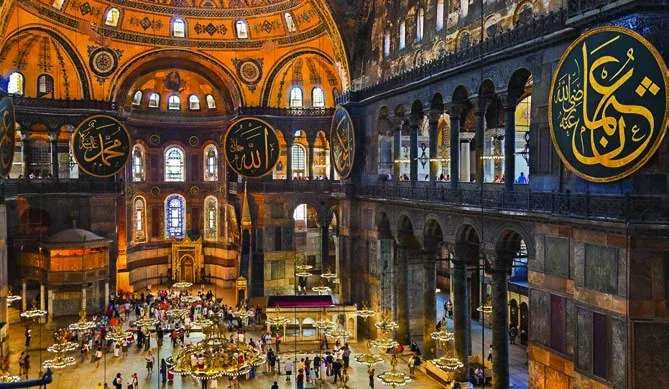
0 of 4 stops exploredYour marks are saved in this browser.
 01
01 — Look up
The great dome
Above the central hall
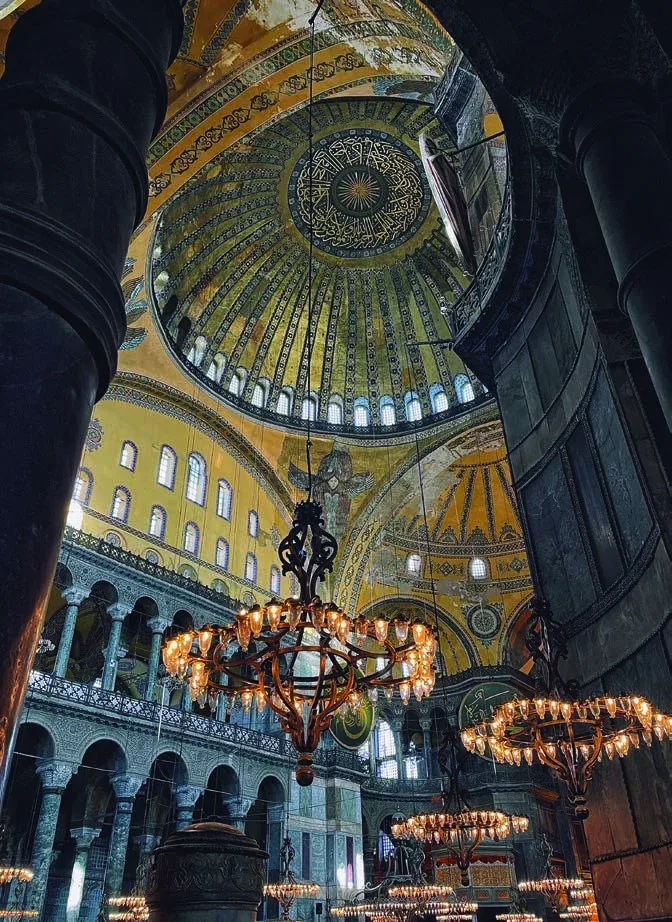
From a permitted viewing area, look toward the centre of the ceiling. Follow the curve of the dome and the ring of windows beneath it.
Three things to notice
- 01The rhythm of the windows and the daylight entering the hall.
- 02The transition from the central dome to the surrounding arches.
- 03The contrast between the high ceiling and the suspended chandeliers.
The story behind it
The present Hagia Sophia was built under Justinian I between 532 and 537. The interior you see today also carries changes and decoration added over later centuries.
 02
02 — Follow the letters
The calligraphic medallions
High above the main hall
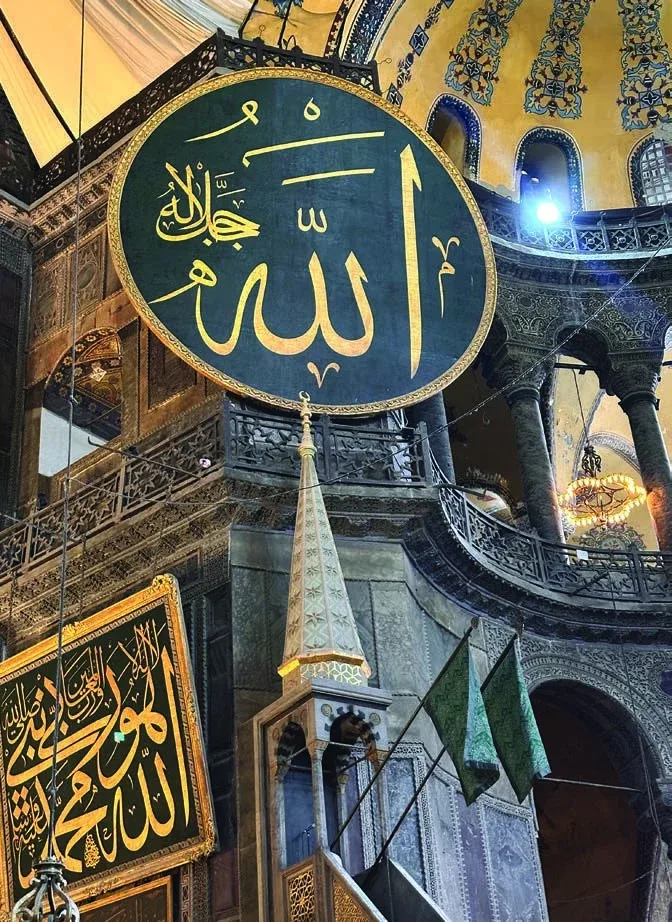
Look for the large round medallions suspended above the hall. Use the photograph to recognise the panel bearing the name Allah.
Three things to notice
- 01Gold lettering against the dark circular background.
- 02The long strokes, curves and spaces within the composition.
- 03How the medallions sit alongside the building’s arches and galleries.
The story behind it
The medallions are part of Hagia Sophia’s Ottoman and Islamic heritage. The guide draws attention to the medallion bearing the name Muhammad above the nave; the photograph here shows the separate Allah medallion.
 03
03 — Look closer
The Byzantine mosaics
The apse, upper galleries and entrances
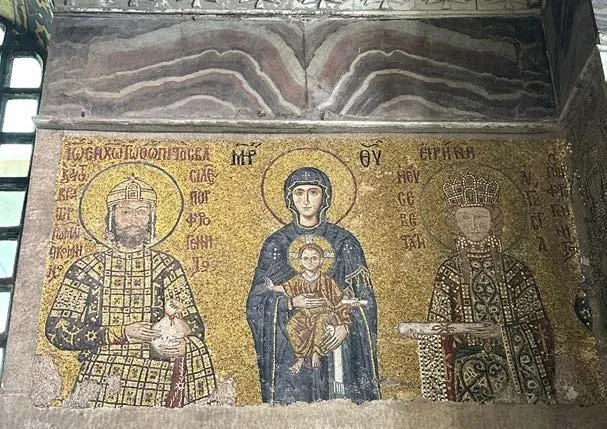
The guide identifies mosaics in several areas: the apse, the upper south gallery and the entrance spaces. Look for those visible along the visitor route available to you.
Three things to notice
- 01The small pieces that form a face, garment or gold background.
- 02The changes in colour and light across the surface.
- 03The surviving detail and the areas where parts of the mosaic are missing.
The story behind it
The guide describes the period of iconoclasm and the revival of figurative mosaics after 843. Its examples include the apse mosaic, the Deësis in the upper south gallery, and the entrance mosaics.
 04
04 — Look down
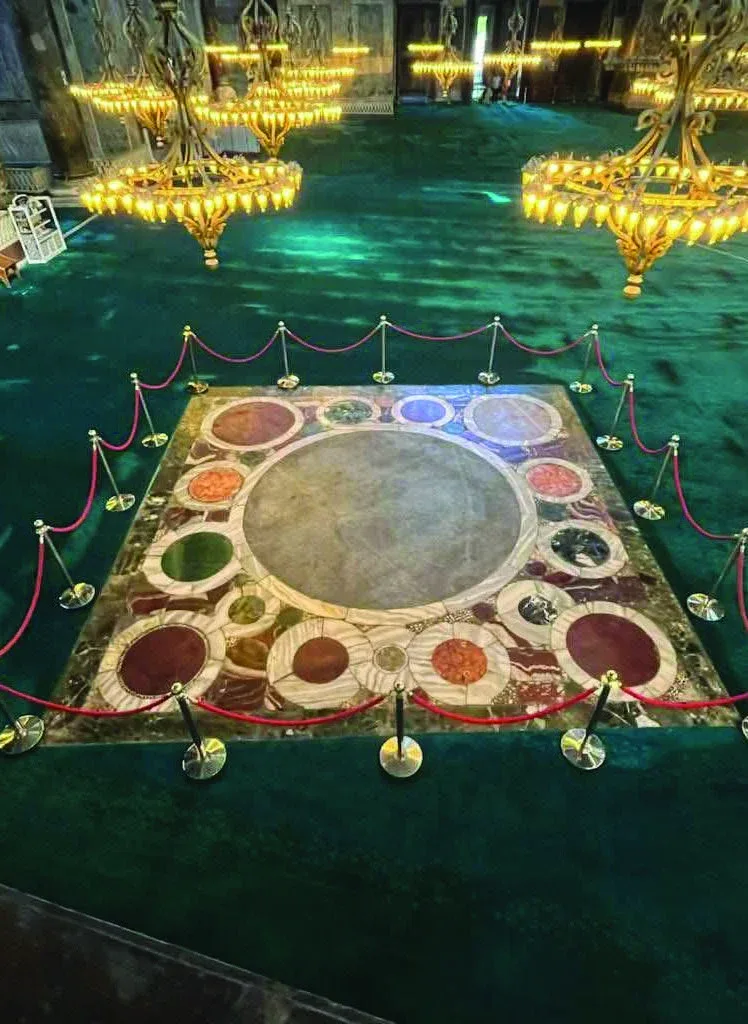
The Omphalion
A marble floor panel beneath the great dome
Look for the coloured marble circles forming a distinct floor panel beneath the dome. Observe it from the designated viewing area.
Three things to notice
- 01The large central circle and the smaller circles around it.
- 02The different colours and natural veining of the marble.
- 03The geometry that connects the circles within the rectangular panel.
The story behind it
The guide explains Omphalion as the Greek word for ‘navel’ and links this floor panel to the coronation ceremonies of Byzantine emperors.
There is more to discover.
Return to any stop whenever you like, or continue into the complete pocket guide.
Open the full guide